How Do Binance and Its Competing Exchanges Compare? A Detailed Review for 2025

When traders ask "how are Binance and two other exchanges doing," they are often comparing the industry leader with either its closest competitor or a regional counterpart. This review focuses on Binance, the world’s largest cryptocurrency exchange by volume, and provides a comparative look at how it stacks up against other major platforms like Coinbase or Kraken. Understanding these differences is crucial for choosing the right trading environment.
First, Binance stands out for its sheer breadth of offerings. With over 600 cryptocurrencies and a deep liquidity pool, it is the go-to platform for active traders and those seeking altcoins. Its fee structure is highly competitive, starting at 0.1% per trade, and can be reduced further if you hold its native BNB token. Additionally, Binance provides advanced tools like futures trading with up to 125x leverage, staking, and a built-in NFT marketplace. However, users in the United States must use Binance.US, a separate entity with a reduced list of available coins, which can be a significant limitation.
In contrast, exchanges like Coinbase prioritize regulatory compliance and user-friendliness. Coinbase is often recommended for beginners because of its intuitive interface and strong insurance policies on custodial funds. While it supports fewer coins than Binance (typically around 150 to 200), it is fully registered with U.S. regulators. The trade-off is higher fees, often 0.5% to 1% per trade, and less flexibility for advanced strategies. Coinbase also offers a professional platform called Coinbase Pro, but its fee schedule remains higher than Binance’s standard rates.
Another comparison point is Kraken. Kraken is renowned for its reliability, strong security track record, and excellent customer support. It supports roughly 200 cryptocurrencies and offers margin trading up to 5x, which is significantly lower than Binance’s leverage, appealing to more conservative traders. Kraken also has a well-regarded staking program and is available in most U.S. states. For security-conscious users, Kraken’s proof-of-reserves audits and lack of major hacks make it a strong alternative to Binance, especially for long-term holders.
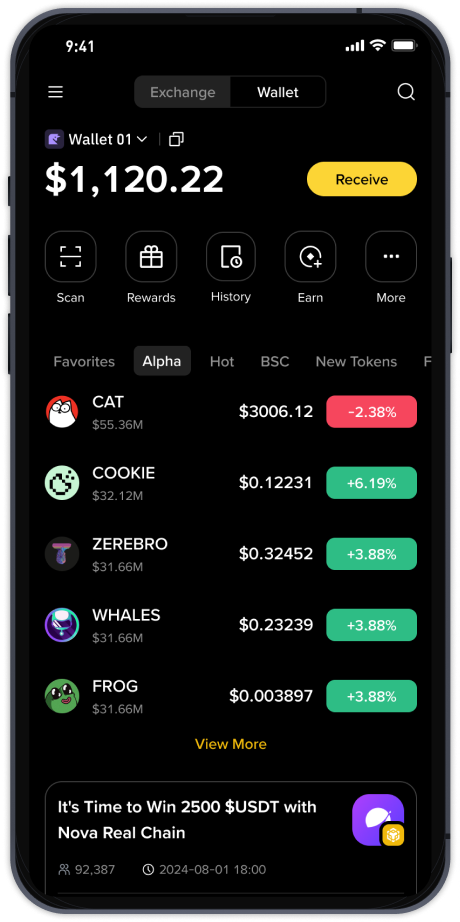
Key differences also appear in user experience and geographical accessibility. Binance excels in global coverage but faces regulatory hurdles in several countries, including the UK, Canada, and parts of Asia. Its mobile app is powerful yet can be overwhelming for new users due to the sheer volume of features. Coinbase and Kraken, meanwhile, offer more restricted services globally but provide a more streamlined experience for non-technical users. For example, Coinbase’s "Buy & Sell" feature allows instant credit card purchases, while Kraken’s "Staking on-chain" gives users direct control over their assets.
Finally, consider liquidity and order execution. Binance’s massive user base ensures that even large trades rarely cause significant slippage. This is ideal for high-frequency or institutional traders. For retail investors moving smaller amounts, the liquidity difference is negligible. However, users concerned about regulatory risk might prefer Kraken or Coinbase, as they have never faced the kind of enforcement actions that Binance has encountered from bodies like the U.S. Securities and Exchange Commission (SEC) and the Commodity Futures Trading Commission (CFTC).
In summary, Binance is best for cost-effective, high-volume trading and access to a vast altcoin library. Coinbase suits beginners and U.S.-based users who value simplicity and regulation. Kraken appeals to security-focused traders seeking reliable staking and fewer compliance risks. The right choice depends entirely on your trading style, location, and risk tolerance.